Search This Blog

Monday, January 31, 2011

The History of Cannons Part 3


1900s-Present


Cannons were used extensively in World War I and World War II. One such cannon was the French 75mm Field Gun. This was a major step forward in cannon technology, because it could fire more rapidly without realigning after every shot.


http://en.wikipedia.org/wiki/Artillery_of_World_War_I

Monday, January 24, 2011

The History of Cannons Part 2


1800s-1900s

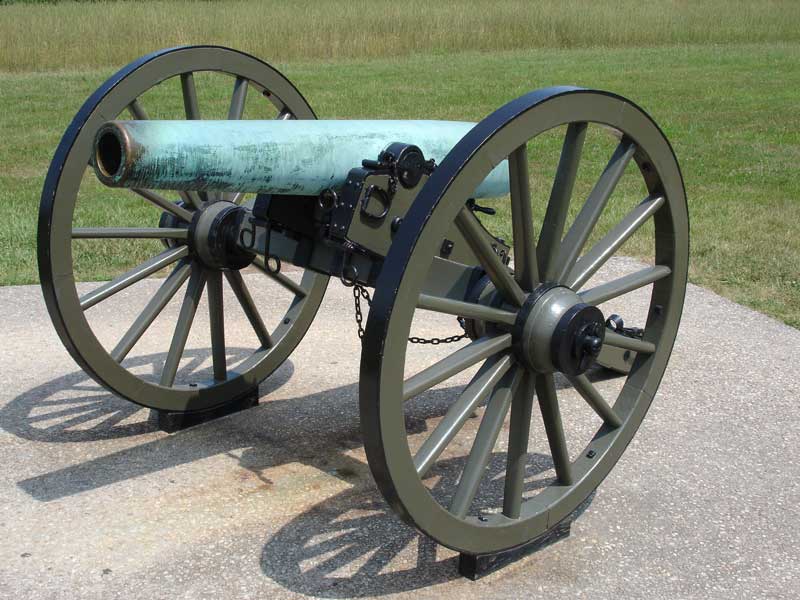
Cannons were an important factor in the the American Civil War. The favorite of both the Union and the Confederacy was the Napolean(image at left), a 12 pounder with a maximum range of 1700 yards. This cannon is estimated to have caused more casualties than all other artillery weapons combined. It was popular because of its safety, reliability, and killing power, especially at close range.


Another cannon used in the 1800s was called the Paixhans gun(image at right). This cannon was used for naval combat, distinguished by a flat trajectory as opposed to angled upward like most cannons at the time. The cannon was designed in 1823 by Henri-Joseph Paixhans. The gun was later adopted in France, Russia, and the United States,


http://www.civilwarhome.com/weapons.htm

Friday, January 21, 2011

Construction Procedures


1)Obtain the materials needed to construct the cannon.
2)Cut off 5cm from the bottom of one of the tennis ball cans
3)Place the other tennis ball can inside the 5cm segment at a 45 degree angle.
(Insert the bottom side of the can into the base)
4) Mark one side of the already-cut can at 8cm, and the opposite side 16cm.
5)Mark a line with the marker to connect these two dots.
6)Tape the base to the bottom of the barrel.
7)Cut off the rims of the tennis ball cans in order to make them fit in the barrel.
8)Tape the two lids together.
9)Insert and set the lid about halfway in the barrel, making sure that it is airtight.


Final design created


We have finalized the designs for the cannon. We chose to launch at a 45 degree angle, because that will be the most efficient angle for maximizing distance. We changed the design from having one hole in the lid inside the cannon to having several smaller holes in order to distribute the force more evenly.

Thursday, January 20, 2011

Chemistry Component: Balanced Equation

The balanced equation
C2 H5 OH + 3O2 -> 2Co2 + 3H2O

Designing the cannon

Our group produced our first design today. It involves using the top of one of the tennis ball cans inside the cannon with a hole in it in order to build pressure. A base will be built from part of the can not being used as the chamber of the cannon.

Thursday, January 6, 2011

The History of Cannons: Part 1


Cannons before the 1800s
-------------------------------

Early cannons are the descendants of fire-lances, a primitive type of flamethrower. Other firearms also descend from the fire-lance, which was one of the first gunpowder weapons in the world.


The earliest known cannon was invented in the 3rd Century B.C. by Ctesibius of Alexandria. Because many of his works are lost, very little is known about this cannon, other than that it used compressed air to fire.


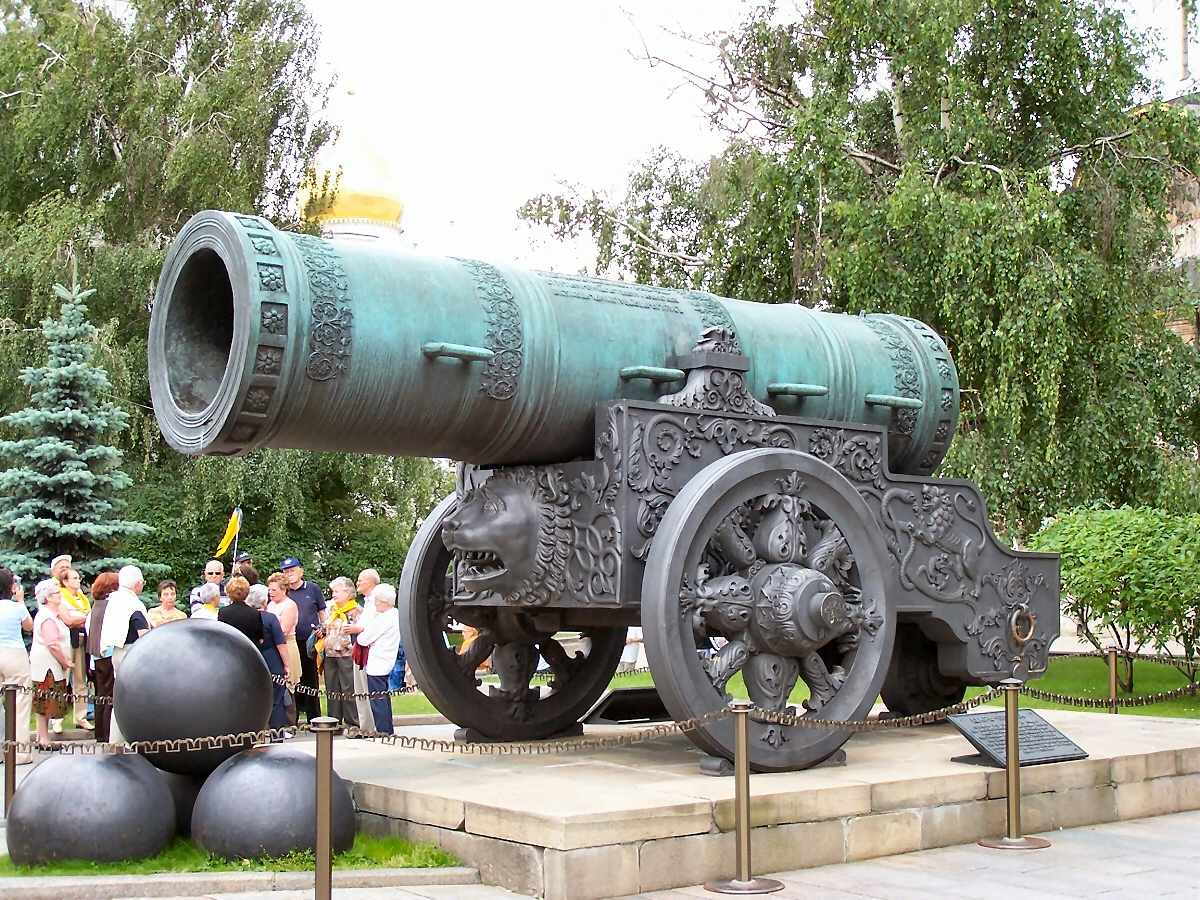
An early cannon design, shown at right, is known as the Tsar Cannon . It was commisioned in 1586 by Tsar Fyodor I Ivanovich of Russia.


http://en.wikipedia.org/wiki/Cannon