Use the quadratic model h = -16t2+v0t+h0 to solve the following problem.
A cannonball is shot upward from the upper deck of a fort with an initial velocity of 192 feet per second. The deck is 32 feet above the ground.
Quadratic Model: h= -16t2+192t+32
How high does the cannonball go?
The cannon will go 608 feet. This is found by finding the y-coordinate of the vertex.
How long is the cannonball in the air?
-192±√(192)2-4(-16)(32) = -192±√36864+2048
--------------------------- ---------------------
2(-16) -32
-192-197= -389
-389/-32=12.15625
The cannon ball is in the air for approximately 12.16seconds.
Thursday, February 3, 2011

The Ethics of Weapon Development
Weapons have been researched and developed for as long as humans have been fighting each other, which is essentially the entire history of people. As the years have gone on, weapons have become increasingly sophisticated, powerful, and dangerous. As weapons become more powerful, their effect on people, especially innocent people, increases. For example, a sword is capable of killing only a single person at a time. Because it is used in close combat, the chances of killing someone who was not intended to be killed are slim to none. However, in the opposite extreme, nuclear weapons, millions of people are capable of being killed in a short period of time. These weapons have (thankfully) not been used very often, only on one occasion have nuclear bombs been dropped. When they were dropped on Hiroshima and Nagasaki, most of the people killed were innocent civilians. When civilians are being killed instead of soldiers, the belief held by many that killing in a war situation is ethical is no longer valid. This crosses the line into murder, which is certainly unethical.
Weapons are not exclusively used and owned by soldiers, however. In America, the constitutional right to own a weapon is protected, but also restricted. Only weapons of relatively low power are available legally in America. In other countries, such as Sierra Leone, more powerful weapons are far more widespread. On the surface, this is caused largely by the lack of a stable and powerful government like the United States government to restrict access to powerful weapons. Another factor, however, is the development of more powerful weapons. As computers became more advanced, lesser computers became cheaper. When computers were first developed, very few in the public owned a computer. Now, over three fourths of Americans own at least one computer. As the ceiling for weapon power increases, a trickle-down effect occurs and powerful weapons become more widespread.
Monday, January 31, 2011
The History of Cannons Part 3

1900s-Present
Cannons were used extensively in World War I and World War II. One such cannon was the French 75mm Field Gun. This was a major step forward in cannon technology, because it could fire more rapidly without realigning after every shot.
http://en.wikipedia.org/wiki/Artillery_of_World_War_I
Monday, January 24, 2011
The History of Cannons Part 2


1800s-1900s
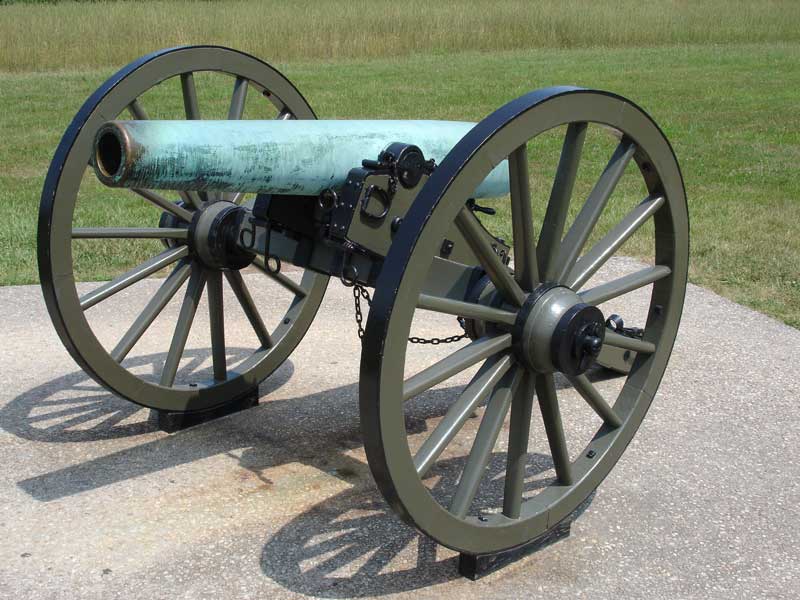
Cannons were an important factor in the the American Civil War. The favorite of both the Union and the Confederacy was the Napolean(image at left), a 12 pounder with a maximum range of 1700 yards. This cannon is estimated to have caused more casualties than all other artillery weapons combined. It was popular because of its safety, reliability, and killing power, especially at close range.
Cannons were an important factor in the the American Civil War. The favorite of both the Union and the Confederacy was the Napolean(image at left), a 12 pounder with a maximum range of 1700 yards. This cannon is estimated to have caused more casualties than all other artillery weapons combined. It was popular because of its safety, reliability, and killing power, especially at close range.
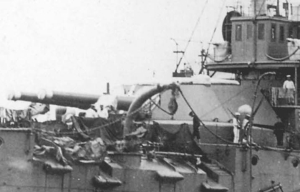
Another cannon used in the 1800s was called the Paixhans gun(image at right). This cannon was used for naval combat, distinguished by a flat trajectory as opposed to angled upward like most cannons at the time. The cannon was designed in 1823 by Henri-Joseph Paixhans. The gun was later adopted in France, Russia, and the United States,
http://www.civilwarhome.com/weapons.htm
Friday, January 21, 2011
Construction Procedures


1)Obtain the materials needed to construct the cannon.
2)Cut off 5cm from the bottom of one of the tennis ball cans
3)Place the other tennis ball can inside the 5cm segment at a 45 degree angle.
(Insert the bottom side of the can into the base)
4) Mark one side of the already-cut can at 8cm, and the opposite side 16cm.
5)Mark a line with the marker to connect these two dots.
6)Tape the base to the bottom of the barrel.
7)Cut off the rims of the tennis ball cans in order to make them fit in the barrel.
8)Tape the two lids together.
9)Insert and set the lid about halfway in the barrel, making sure that it is airtight.
2)Cut off 5cm from the bottom of one of the tennis ball cans
3)Place the other tennis ball can inside the 5cm segment at a 45 degree angle.
(Insert the bottom side of the can into the base)
4) Mark one side of the already-cut can at 8cm, and the opposite side 16cm.
5)Mark a line with the marker to connect these two dots.
6)Tape the base to the bottom of the barrel.
7)Cut off the rims of the tennis ball cans in order to make them fit in the barrel.
8)Tape the two lids together.
9)Insert and set the lid about halfway in the barrel, making sure that it is airtight.
Final design created

We have finalized the designs for the cannon. We chose to launch at a 45 degree angle, because that will be the most efficient angle for maximizing distance. We changed the design from having one hole in the lid inside the cannon to having several smaller holes in order to distribute the force more evenly.
Thursday, January 20, 2011
Subscribe to:
Posts (Atom)